Coconut milk powder is rapidly becoming a dairy alternative staple in both developed and emerging markets, especially across the tropical belt such as India, UAE, Malaysia and Singapore. As veganism grows, lactose intolerance (NASA has that at 70-90% of Asians) and keto trends explode, people are using it for everything from dals and curries to smoothies. But is coconut milk powder actually healthy, or a shortcut way to go from whole food to processed?
OK! In this all-around 2026 guide, we will plunge the depths of what those science-backed health-boasting benefits might be, get into some nitty-gritty nutritional specifics about them, take a quick swim in what potential drawbacks exist (if any), and include expert opinions from people like those at Harvard Health or WHO or recent research sources (e.g., a 2023 Nutrients review on MCTs).
We will also dispel myths, look at how it is used in regional fare and offer tips for Indian, UAE, Malaysian and Singaporean readers. Whether you’re in muggy Chennai with storage issues or in Dubai for new keto friendly options,this article has you covered
What Is Coconut Milk Powder?
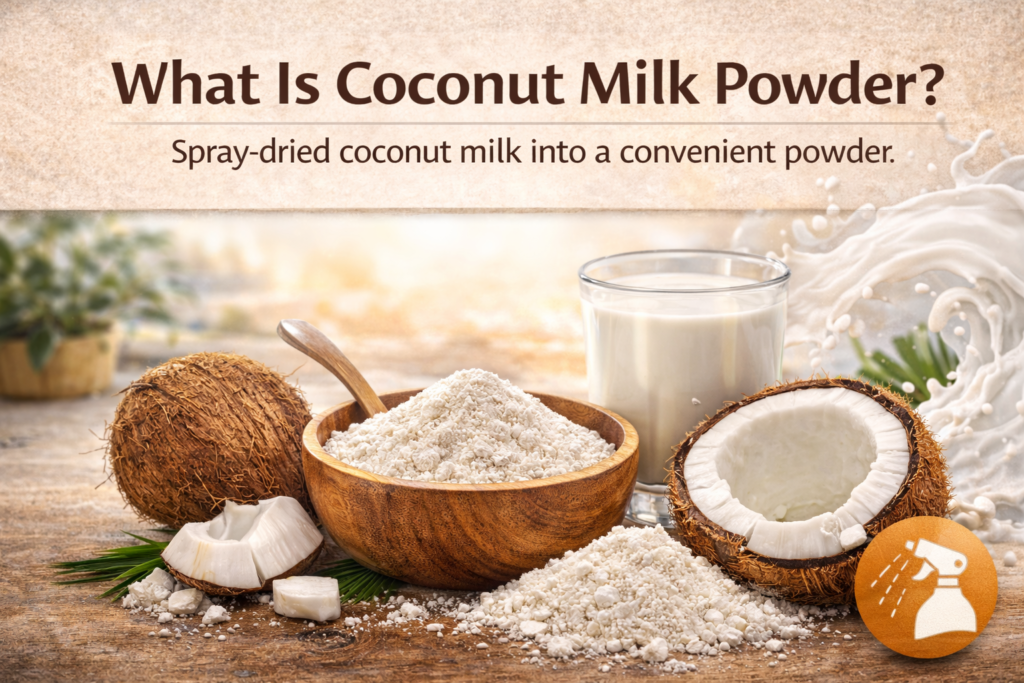
Coconut milk powder is prepared by spray drying coconut milk which is obtained from the white mature coconut kernel. Just add warm water and you have rich coconut milk in seconds (no cans, no waste, and no refrigeration necessary). That makes it perfect for hot, sweaty Indian (e.g., Tamil Nadu or Kerala), Malaysian and Singaporean climes where fresh coconut milk goes rancid swiftly or time strapped UAE kitchens where convenience is key
- Indian cuisines: Thickening agent for creamy curries such as Kerala style avial, Tamilnadu sambar, or North Indian kormas Addition of thickness without the use of dairy.
- UAE and Middle East treats: Kunafa, Halwa, Baklava varieties to cater for halal vegan requests.
- Malaysian and Singaporean food: Required for rendang, laksa, nasi lemak, Peranakan curries (to name just a few!) It retains the food’s flavors.
- Global diets: Vegan, keto and gluten free recipes from around the world including health centric cafes in Singapore.
- Food sectors: Baking, drinks, and exports going to India as the leading producer (India is based on 2025 Statista category figures within a 25% yr annual plant based export growth pattern.
And for home cooks in India or businesses in the UAE, it cuts down on waste over canned versions that can sometimes split or go bad quickly.Good brands have got safety regarding FSSAI (India),HACCP, halal.
Coconut Milk Powder Nutrition Facts
Coconut milk powder is nutritionally high in calories from fats. Taking info from updated 2025 US Department of Agriculture FoodData Central, as well as manufacturer data (we checked a bunch, including Indian exports like Kerala) per 100g is this
| Nutrient | Amount | % Daily Value (2,000-calorie diet) |
| Calories | 600-700 kcal | 30-35% |
| Total Fat | 55-65g | 70-85% |
| Saturated Fat | 45-55g | 225-275% (plant-based, not trans fats) |
| Carbohydrates | 20-25g | 7-9% |
| Sugars | 5-10g (natural) | Low, <5% |
| Protein | 5-8g | 10-16% |
| Fiber | 2-4g | 7-14% |
| Iron | 2-4mg | 11-22% (great for anemia common in India) |
| Magnesium | 50-80mg | 12-20% |
| Potassium | 400-600mg | 9-13% (supports heart health in humid climates) |
| Phosphorus | 100-150mg | 10-15% |
| Vitamin C | 1-2mg | 1-2% (antioxidant boost) |
Source: USDA 2025 updates, Harvard Nutrition Source, and averages from brands like those certified by FSSAI. Low in added sugars, but portion control is key for calorie watchers.
When compared to liquid coconut milk, the powder still contains much of its nutrients, but has been condensed thus providing a stronger dose per serving. For Singaporeans on low carb diet,win lar <25g carbs/100g
7 Evidence Based Health Benefits of Coconut Milk Powder
Yes, coconut milk powder can be good for health when used moderately. Here’s what science says:
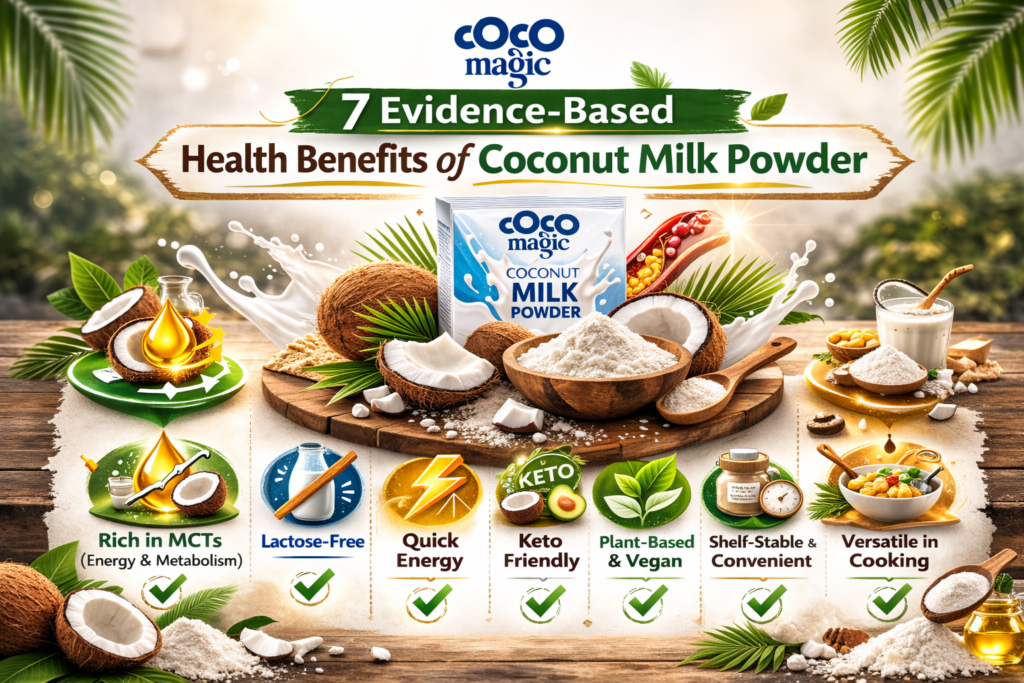
1️⃣ Rich in Medium-Chain Triglycerides (MCTs)
MCTs in coconuts are short-chain fats that are rapidly digested for use as an energy source, while their longer-chain counterparts take longer process. One 2015 review in the Journal of the Academy of Nutrition and Dietetics found that MCTs might increase metabolism and help with weight management. Trendy in keto diets and UAE fitness for sports nutrition.
2️⃣ Lactose Free Dairy Alternative
Good for lactose intolerance, which is very high in some Asian population (up to 90%, according to WHO). It’s creamy without dairy, aiding plant-based transitions in India and Malaysia.
3️⃣ Provides Quick Energy
MCTs offer fast fuel without blood sugar spikes. Dietitians from Harvard note this can enhance satiety in balanced meals.
4️⃣ Supports Keto and Low-Carb Lifestyles
Low carb (less than 25g per 100g) and high healthy fat for my macros. A 2020 Nutrients study associated MCTs with superior ketone production. Perfect for intermittent fasters living busy lives in UAE cities.
5️⃣ Fully Plant-Based and Inclusive
Vegan, no animal products aligns with religious diets like Hindu vegetarianism in India or halal preferences in Malaysia/UAE
6️⃣ Shelf-Stable and Convenient
Long shelf life 1-2 years No need for fridge space Great for export and tropical countries Good brands adhere to Food Safety and standards Authority of India or HACCP regulations to ensure safety.
7️⃣ Versatile in Cooking
Enhances soups, smoothies, coffee, and ice cream with natural creaminess. A Malaysian study highlighted its role in traditional recipes for cultural preservation.
Is Coconut Milk Powder Good for Weight Loss?
It’s good for weight loss if way is limited (1-2 tbsp/day). MCTs suppress appetite and burn fat, but thanks to high calories, going overboard can get you in trouble. Serve with low-cal Indian salads or UAE grilled meats. A 2024 study in Obesity Reviews concluded that MCTs help achieve modest weight loss (1-2kg/month) with controlled diets
What About Heart Health & Side Effects?
The hang up is on saturated fats, but they’re plant-based and MCT-heavy, in a range that may not impact cholesterol at all, or even be beneficial for it. But if you suffer from high cholesterol (prevalent in urban India by 2025 NHFS figures), better see a doctor.
Side Effects: Uncommon, but excessive amounts may lead to indigestion or weight gain. Allergic reactions to coconut are rare, but they are possible.
Common Myths About Coconut Milk Powder
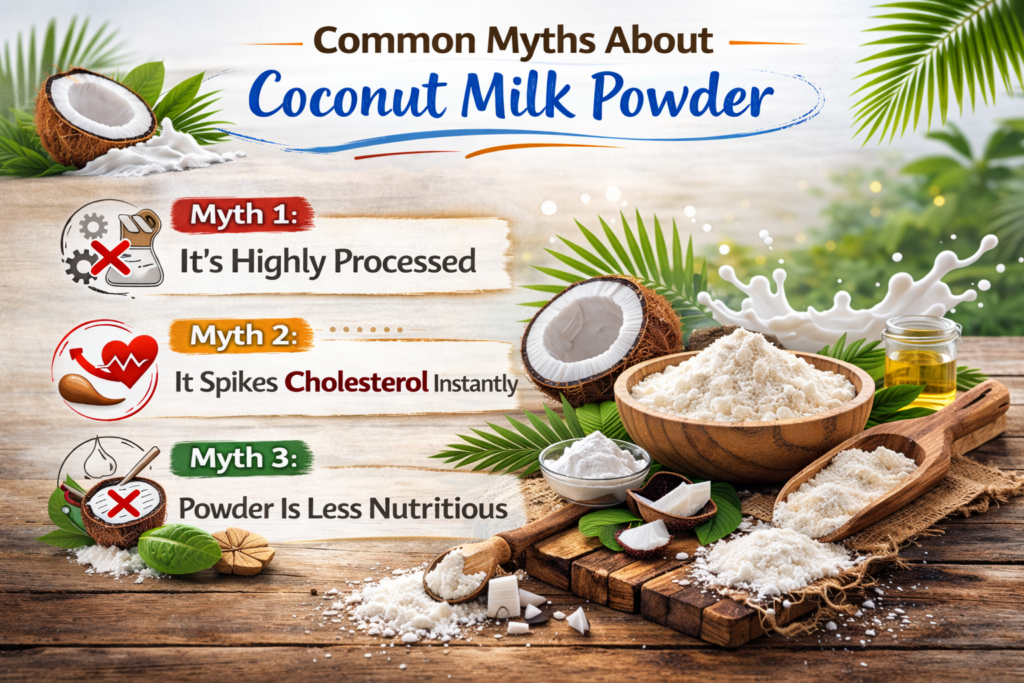
Myth 1️⃣ It’s Highly Processed and Artificial
Good versions are simply dried coconut milk, nothing added. Check for certifications such as ISO or organic
Myth 2️⃣ It Spikes Cholesterol Instantly
No evidence for healthy people. A British Heart Foundation review says genetics and lifestyle matter more.
Myth 3️⃣ Powder Is Less Nutritious Than Liquid
Similar profiles; powder just concentrates it for storage. Fresh is ideal, but powder retains most benefits.
Growing Demand in India, UAE, and Malaysia
- India is the vegan and Kerala/Tamil Nadu export led plant-based 30% annual growth in products consumption.. (Statista 2025).
- UAE sees keto spikes in Dubai gyms.
- Malaysia/Singapore are using it to keep pace with a 25% rise of vegan markets for halal, authentic cuisines.
- Challenges: Supply chain humidity;
- solutions: Vacuum sealed packs
How to Choose High Quality Coconut Milk Powder?
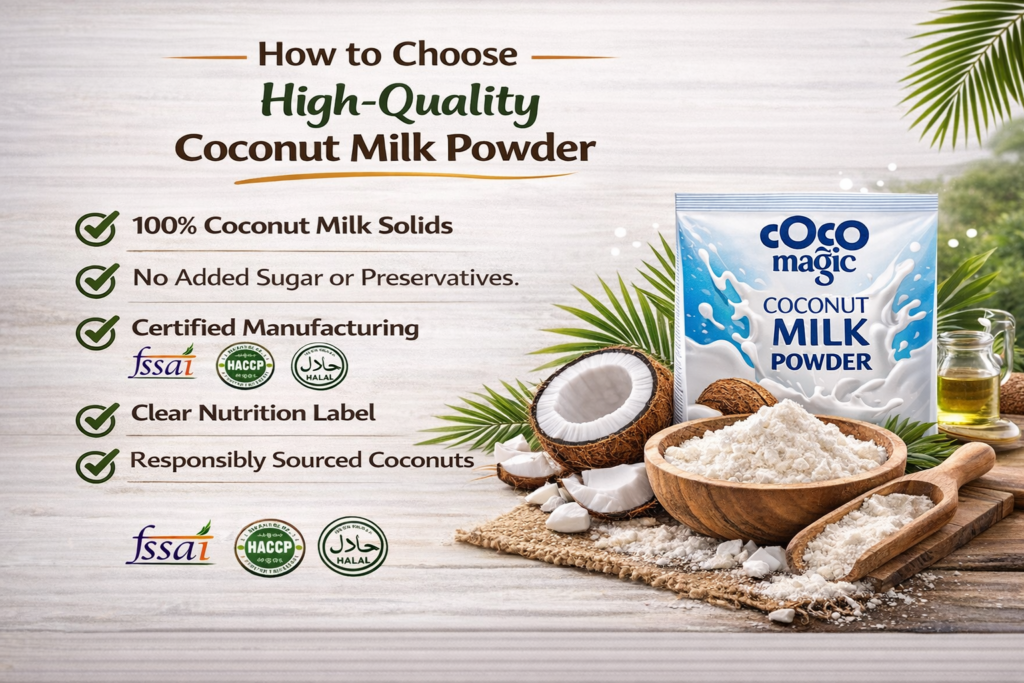
Prioritize
- Ingredients: Pure and simple just coconut milk solids (no sugar / preservatives)
- Certifications: FSSAI (India), halal (UAE/Malaysia), organic.
- Source: Responsibly farmed in Southeast Asia (Sri Lanka/Philippines for Singapore imports)
- Brands: Seek out transparent ones like Coco Magic Coconut Milk Powder pure, additive free and brilliant for regional recipes
Conclusion: Is Coconut Milk Powder Good for Health?
Absolutely it is a nutrient rich, lactose free powerhouse with MCTs for fueling the energy producing organs and enhancing the immune system. But they require moderation because fats/calories. On a balanced diet of regional staples plan (Indian millets, UAE dates), it’s savvy. For high quality give a try to Coco Magic Coconut Milk Powder perfect for your curries/desserts; Keto use etc..
Ready to boost your health? Shop Now!
Frequently Asked Questions
Yes, but it is high in calories. Coconut oil like other oils and fats does contain satiating components such as MCTs, which can keep us full for longer to help prevent snacking between meals,” White says. Supporting this, an earlier 2023 Nutrients paper pointed towards MCTs helping to lose a relatively modest two pounds or so (1-2 kg per month) when used as part of a calorie-controlled diet. For Indian users in Chennai who are looking to handle a humid weather kindly use 1-2 tbsp in low-cal curries or smoothies or 450 per 100g calories of fat? But too much of them can cause weight gain from the fat these types of milk contain.
Mostly, yes its low on the glycemic index (GI), plus your not spiking up any sugar as its only got 5-10g of natural sugars (per hundred grams) in it you’ll stabilise blood-ps without spikes. By the way, MCTs deliver fast energy without insulin spikes, according to a 2025 guideline from Indian Diabetes Association. For Singaporean or Indian diabetics (typically found in urban areas like Chennai), select unsweetened versions for tea or dals. Keep a watch on the portions, for excess calories can sneak up and eventually interfere with weight management.
May lead to digestive discomfort if you pile on without working up slowly or being accustomed to high fat/fiber intakes. Allergy to coconut is rare, but not unheard of. Processing could also cut some nutrients compared with fresh, according to a 2025 MedicalNewsToday update. In humid conditions, such as in Malaysia or India, store tightly sealed to avoid mold. While it’s low in the sulfur-bearing amino acids, it is still best to start off with very small amounts (1 tsp) and consult with a practitioner if you have gut sensitivities.
It helps to support immunity through lauric acid, which is antibacterial, antiviral and antifungal and may help fight infection. Packed with vitamins C, E, and minerals such as selenium, iron, it boosts the overall defence according to a 225 Pharmeasy review. Perfect for Singapore or the UAE where infections comes in seasons; add to soups, bags and rendang as it’s a product that also tastes good. Best used in conjunction with a well rounded diet No single food is a cure all.
Not always; its saturated fat from plants (mostly from MCTs like lauric acid) can raise HDL (good) cholesterol without any considerable impact on LDL in healthy people. In a 2024 Circulation meta-analysis, there was no strong connection to heart disease when consumed moderately (less than 10% of daily calories, according to WHO). In high heart disease risk areas such as UAE or Malaysia, consume it along with potassium-rich foods for even better benefits. People with high cholesterol should consult a doctor, as genetics are more important